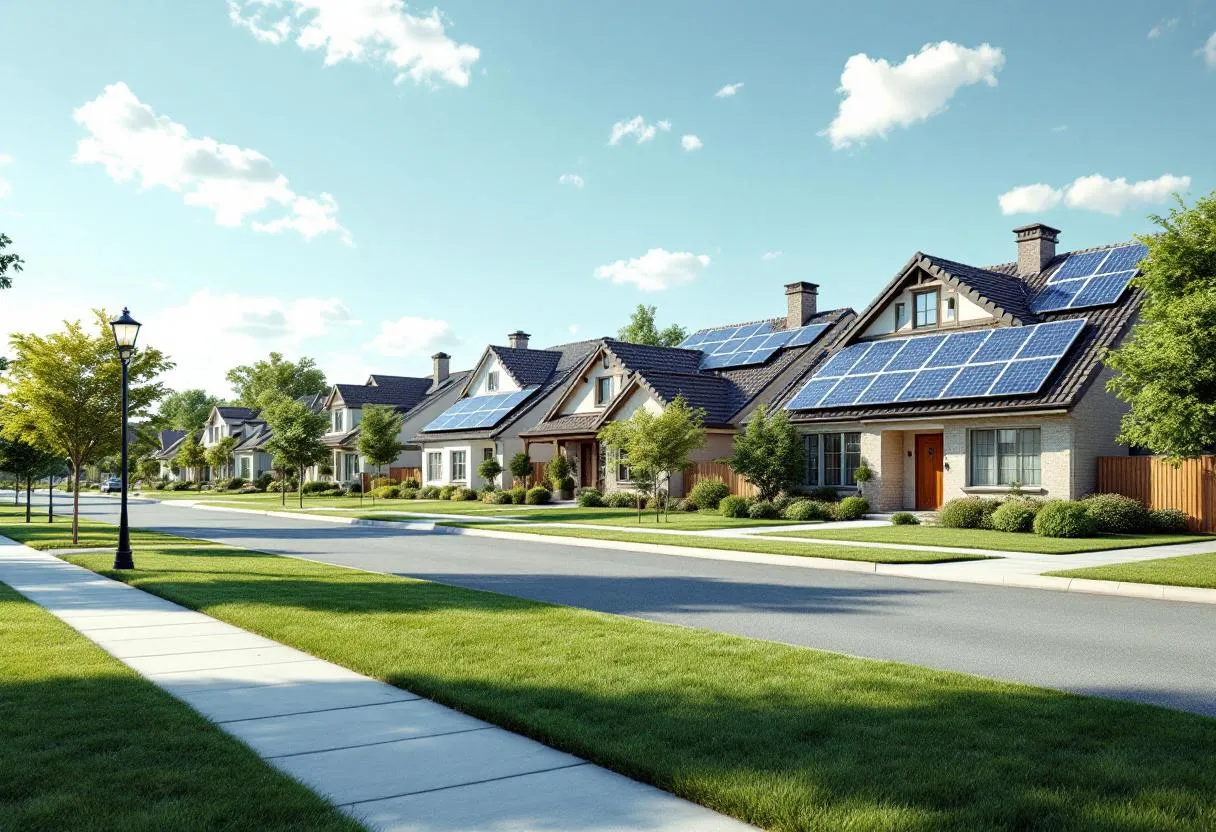
The Reality: HOA Restrictions vs. Solar Access Rights
Across the United States, roughly 74 million homeowners live under HOA governance. Many of those HOAs have architectural guidelines that restrict or prohibit solar panel installations — citing aesthetics, property values, or community "uniformity."
But here's the critical point: an HOA is not above the law. As of 2026, more than 30 states have enacted some form of solar access legislation that limits what an HOA can do to block your solar installation. Even at the federal level, there are protections that homeowners often don't know about.
The tension boils down to this: your HOA can impose reasonable aesthetic guidelines. But it cannot unreasonably restrict your right to generate your own solar power. The line between "reasonable" and "unreasonable" is where most disputes happen — and where this guide comes in.
Key takeaway: Before accepting an HOA denial, check whether your state has a solar rights law. In most states with these protections, the HOA's rejection is likely unenforceable.
Federal Protections
While there is no comprehensive federal law that explicitly guarantees every homeowner's right to install solar panels, several federal statutes and regulations provide meaningful protections that homeowners can leverage against HOA restrictions.
FCC Over-the-Air Reception Devices (OTARD) Rules
The FCC's OTARD rule (47 C.F.R. § 1.4000) prohibits restrictions that impair the installation, maintenance, or use of antennas and satellite dishes up to 1 meter in diameter. While this rule was designed for TV antennas and satellite dishes — not solar panels — it has been relevant for homeowners who install solar-powered antennas or use solar equipment in conjunction with protected devices.
Important caveat: The OTARD rule does not directly cover standalone solar panels. If you're relying on federal protection for solar, the Energy Policy Act is stronger.
Energy Policy Act of 2005
Section 1211 of the Energy Policy Act encouraged states to adopt solar easement legislation and solar access policies. While not a direct mandate, it laid the groundwork for the wave of state protections that followed. More importantly, it established a federal policy preference for solar energy that courts have referenced when evaluating HOA disputes.
Fannie Mae & Freddie Mac Solar Guidelines
Both Fannie Mae and Freddie Mac — which back the majority of U.S. mortgages — have updated their appraisal guidelines to recognize solar installations as adding value to homes. This undercuts the common HOA argument that solar panels reduce property values. In 2026, appraisers are specifically trained to factor in solar systems when assessing worth.
Solar Access Rights by State
State laws vary widely, but several states have enacted some of the strongest solar protections in the country. Here's a breakdown of the most important ones:
| State | Key Law | What It Says |
|---|---|---|
| California | CA Civil Code § 714 (Solar Rights Act) | HOAs cannot prohibit solar. They can only impose restrictions that don't increase costs by more than $2,000 or decrease efficiency by more than 20%. Approval must be completed within 45 days. |
| Texas | TX Property Code §§ 203.002 & 204.010 | HOAs cannot ban solar installations. Restrictions must not significantly increase cost or decrease efficiency. The HOA must approve or deny applications within 60 days — silence means automatic approval. |
| Florida | FL Statute § 163.04 (Solar Rights Act) | No ordinance, covenant, or agreement can effectively prohibit solar. HOAs may impose reasonable restrictions, but cannot deny systems outright. Any denial must be in writing with clear justification. |
| Arizona | AZ Revised Statutes § 33-1816 | One of the strongest solar access laws. HOAs cannot restrict solar panels on rooftops. Restrictions on ground-mounted panels are allowed. Design guidelines must be objective and applied evenly. |
| New York | NY Real Property Law § 313 | Restrictive covenants that prohibit solar energy systems are void. Local governments and HOAs may impose reasonable conditions regarding placement and appearance. |
| Colorado | CO Revised Statutes § 38-30-168 | HOAs cannot unreasonably restrict solar energy devices. Any regulation must not add more than $2,500 to the total system cost or reduce performance by more than 15%. |
How to Negotiate with Your HOA
The best outcome is an amicable approval. Even in states with strong solar access laws, going through the proper channels and being willing to compromise on aesthetics can save you time, money, and neighborly friction. Here's how to approach the negotiation:
Understand the Design Review Process
Most HOAs require you to submit a formal application through their Architectural Review Committee (ARC) or Board of Directors. Your CC&Rs (Covenants, Conditions & Restrictions) should specify:
- ✓ Required forms — many HOAs have a standard architectural modification request form
- ✓ Review timeline — typically 30–60 days depending on your state
- ✓ Submission requirements — plans, photos, equipment specs, installer information
- ✓ Appeals process — what happens if your application is denied
Offer Aesthetic Compromises
Showing good faith goes a long way. Consider offering concessions like:
- ✓ All-black panels — flush-mount, frameless, or black-on-black panels blend into most roofs
- ✓ Setback requirements — panels set back from the roof edge or placed on rear-facing slopes not visible from the street
- ✓ Matching hardware — color-matched mounting rails, conduit covers, and trim
- ✓ Landscaping buffers — strategic plantings to screen ground-mounted equipment
- ✓ Solar roof tiles — products like Tesla Solar Roof or GAF Timberline Solar look like standard roofing from the street
Document Everything
Keep a detailed record of every interaction with your HOA:
- ✓ Save all correspondence — emails, letters, meeting minutes, submitted forms
- ✓ Take dated photos — before, during, and after installation
- ✓ Get installer input — have your solar provider prepare a professional site plan with panel placement details
- ✓ Note deadlines — track the day you submitted and the day the HOA's response is due under state law
Pro tip: Submit your application by certified mail or another method that provides proof of delivery. This creates a paper trail that's invaluable if you need to escalate later.
Sample Application Letter Structure
If your HOA doesn't provide a standard form, use this structure for your solar installation request:
// Header
[Your Name]
[Your Address]
[Date]
Attn: Architectural Review Committee
[HOA Name]
[HOA Address]
Re: Request for Approval — Residential Solar Panel Installation
// Introduction
Dear Members of the Architectural Review Committee,
I am writing to formally request approval for the installation of a residential solar energy system at my property located at [Address].
// System Description
The proposed system includes:
• [Number] [Brand/Model] solar panels
• Total system size: [X] kW
• Mounting method: [Roof-mount / Ground-mount]
• Panel color: [All-black / Standard]
• Inverter: [Brand/Type]
• Estimated annual production: [X] kWh
// Design Details
The panels will be installed on the [south-facing / rear] roof slope, set back [X] inches from the roof edge, and will not be visible from the street. All mounting hardware and conduit will be color-matched to the roof.
// Legal Reference
This installation is made in accordance with [State Solar Rights Law Citation], which protects a homeowner's right to install solar energy systems subject to reasonable aesthetic guidelines.
// Enclosures
Enclosed please find:
• Site plan with panel layout
• Equipment specifications and photos
• Installer credentials and license
• Photographs of the existing property
// Closing
I am happy to discuss any design modifications that would meet community guidelines while preserving the functionality of the system. Please respond within the timeframe specified by [State Law, typically 30–60 days].
Sincerely,
[Your Name]
[Phone Number]
[Email]
What If the HOA Still Says No?
If your HOA denies your application (or simply ignores it past the legal deadline), you have several escalation paths:
1. Legal Escalation Options
Small Claims Court
In many states, you can sue your HOA in small claims court over unreasonable solar restrictions. Small claims limits typically range from $3,000 to $15,000 depending on your state. This covers legal fees and any damages from the denied installation. No attorney is required, making this the most accessible first step.
State Attorney General
If your state has a solar rights law, file a complaint with your state's Attorney General office. Many AGs take consumer protection and housing rights seriously, and an official inquiry from the AG's office can pressure the HOA to comply. Some states have specific enforcement provisions in their solar access laws.
Private Attorney
A real estate or solar rights attorney can send a cease-and-desist letter on your behalf, which often resolves the issue quickly. In states like California, the HOA may be required to pay your legal fees if they unreasonably deny your application under the Solar Rights Act.
Mediation / Arbitration
Many HOA governing documents require mediation before litigation. This is a lower-cost, lower-conflict option. A neutral mediator helps both sides reach a compromise. Some state laws mandate mediation as a first step in solar access disputes.
Should You Just Install Anyway?
Generally, no. Even if state law is on your side, installing without any attempt at HOA approval can weaken your legal standing and result in fines, liens, or forced removal. Always attempt the formal process first. If the HOA denies you unreasonably, you'll be in a much stronger position to challenge or proceed with legal backing.
HOA Approval Checklist
Follow this step-by-step checklist to navigate the HOA approval process smoothly:
Review Your CC&Rs
Read your HOA's Covenants, Conditions & Restrictions for any solar-related provisions, architectural guidelines, or design review requirements.
Research Your State Solar Rights Law
Look up your state's solar access legislation. Key details: cost increase caps, efficiency protection limits, HOA response deadlines, and remedies for non-compliance.
Hire a Reputable Solar Installer
Choose a licensed installer experienced with HOA submissions. They can prepare professional site plans, equipment renderings, and compliance documentation.
Prepare Your Application Package
Include: site plan, panel layout, equipment specs, color samples, installer credentials, property photos, and a cover letter referencing your state's solar rights law.
Submit by Certified Mail
Send your application via certified mail (return receipt requested) or hand-deliver with a witness. Keep copies of everything.
Track the Response Deadline
Note the date you submitted and the statutory deadline for the HOA's response. In many states, failure to respond = automatic approval.
Respond to Any HOA Requests
If the HOA asks for modifications, respond promptly. Offer reasonable compromises (panel color, placement, screening).
Proceed or Escalate
If approved — schedule installation. If denied or ignored — consult an attorney, file a complaint with your state AG, or pursue small claims court.
Frequently Asked Questions
Can my HOA completely ban solar panels?
In most cases, no. Over 30 states have solar access laws that prevent HOAs from outright banning solar installations. The 2007 Energy Policy Act established federal protections, and states like California, Texas, and Florida have some of the strongest solar rights laws in the country. Your HOA can impose reasonable aesthetic restrictions but cannot prohibit solar entirely.
What are "reasonable restrictions" an HOA can impose on solar panels?
HOAs can impose restrictions that do not significantly increase installation costs or significantly decrease system efficiency. This includes guidelines on panel placement (e.g., not visible from the street), color requirements for frames and mounting hardware, setback requirements, and design review processes. However, these restrictions cannot make the system effectively impossible to install — typically, cost increases of more than 10–20% (depending on state law) cross into "unreasonable" territory.
Do I need HOA approval before installing solar panels?
Yes — always submit a formal application. Even if your state has solar access protections, going through the approval process creates a paper trail and gives the HOA a chance to respond properly. Check your CC&Rs for the specific process and timeline. Most states require the HOA to respond within 30–60 days, and silence often means automatic approval.
What happens if my HOA fines me for installing solar without approval?
If you install solar in a state with solar access protections, HOA fines may be unenforceable. However, skipping the approval process weakens your legal position and can complicate matters. Always submit a proper application first. If the HOA issues fines anyway, you can challenge them through small claims court, your state's attorney general, or a private attorney specializing in solar rights.
Does the FCC regulate HOA solar panel restrictions?
The FCC's OTARD rule primarily protects antennas and satellite dishes up to 1 meter — not solar panels. While it has been used to defend solar-powered antenna equipment, for standalone solar panels, rely on state solar access laws (like California's Solar Rights Act or Texas Property Code §§ 203.002 & 204.010) and the federal Energy Policy Act of 2005 rather than the OTARD rule.
🔢 See exactly how much you'll save
Plug your monthly bill into our free solar calculator — HOA drama aside, you still deserve to know your savings.