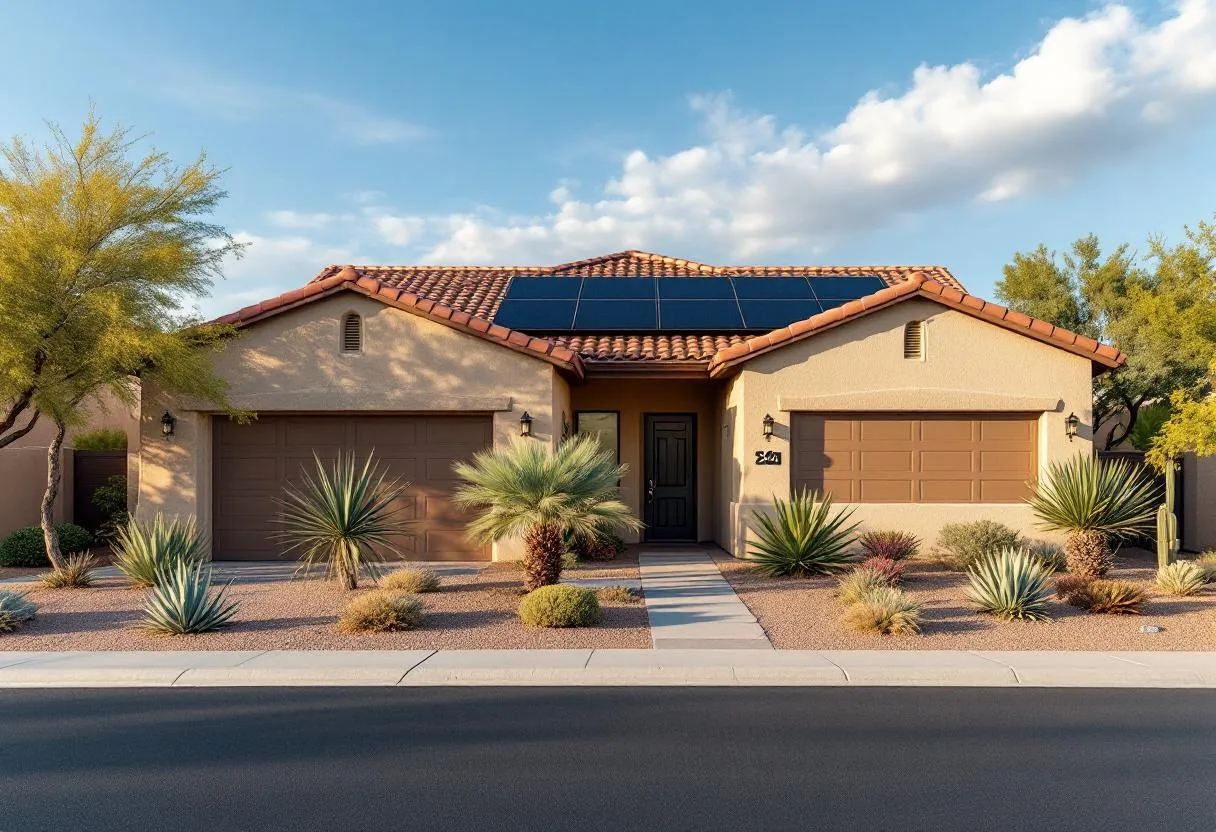
📍 Find Your Exact Savings
We have a specific tool for this. Enter your zip code in our calculator to see a list of utility rebates available in your exact neighborhood.
Nevada has more sunny days than nearly any other state in the U.S. Las Vegas averages over 310 days of sunshine per year. That makes it one of the best places in the world for solar power.
But going solar in Nevada is not just about the sun. There is a solid mix of federal credits, property tax rules, and utility programs that can save you thousands. The catch? Nevada's net metering rules have changed, and not all deals are as sweet as they used to be.
Here is your complete breakdown of every solar incentive and program available in Nevada for 2026.
Quick Summary — Nevada at a Glance
🔑 Key Takeaways for Nevada
30% Federal Tax Credit
Get 30% of your install cost back on your taxes.
Property Tax Abatement
Solar adds value but won't raise your property taxes.
Net Metering (Limited)
NV Energy credits are lower than the old 1:1 rate.
6-10 Year Payback
Most Nevada homes break even fast — the sun works overtime.
30% Federal Tax Credit (ITC)
Federal Investment Tax Credit
This is the single best solar deal in the country — and Nevada homeowners get the full amount. If you spend $25,000 on a solar system, you get $7,500 back from the IRS as a dollar-for-dollar credit on your federal income taxes.
This credit applies to solar panels, inverters, batteries, and installation costs. It is valid through 2032, so you have time — but installing sooner means earning those savings sooner.
Nevada Net Metering Rules (NEM Changes)
Nevada's net metering program has gone through some big changes that affect how much you get paid for excess solar energy. Here is the current situation:
How Net Metering Works in Nevada Now
Under the current Nevada net metering rules (often compared to NEM 3.0), NV Energy no longer credits you at the full retail rate for every kilowatt-hour you send back to the grid.
Instead, credits are lower — closer to 75% of the retail rate for most customers. What does this mean for you?
- ✅ You still get credits for excess power sent to the grid.
- ✅ Credits roll over month-to-month.
- ⚠️ Each credit you bank is worth less per kWh than it was under the old system.
- 💡 This means sizing your system to match your usage is more important than ever — going too big wastes energy.
⚠️ Key point: Because NV Energy pays less for exported power than before, the best strategy is to size your system to cover your own electricity use — rather than trying to sell a ton of power back to the grid. A good installer will help you find the right size.
NV Energy Programs & Time-of-Use Rates
NV Energy — Your Power Provider
NV Energy is the main power company for most of Nevada. If you live in Las Vegas, Reno, Sparks, or Mesquite, they are likely your utility.
NV Energy offers a few things worth knowing about:
- Time-of-Use (TOU) Rates: NVEnergy's TOU plans charge more during peak hours (usually 3 PM to 7 PM on weekdays) and less during off-peak times. With solar, you generate the most power during peak-price hours, which can greatly lower your actual bill even with lower net metering credit rates.
- Battery Storage Bonus: If you pair solar with a battery, you can store energy during the day and use it during those expensive evening hours. This is a smart move in Nevada's TOU rate structure.
- Rebates: NV Energy occasionally offers solar incentive programs. Check their website for current offers — they tend to be seasonal and fill up fast.
Property Tax Abatement for Renewable Energy
Property Tax Abatement
Here is some good news. When solar panels make your home worth more, the extra value is abated (removed) from your property tax assessment.
Nevada law allows homeowners to exclude the value of a solar energy system from their property taxes. This means your home value goes up, but your property taxes do not because of the solar system.
How Nevada Heat Affects Solar Panels
This is an important thing to understand before you buy — especially if you live in Las Vegas where summer temperatures regularly hit 110°F or higher.
🔥 The Heat & Efficiency Trade-off
Solar panels actually lose a small amount of efficiency as they get hotter. For every degree above 77°F (25°C), a typical panel loses about 0.3% to 0.5% of its power output. In a 110°F Las Vegas summer, that can mean a 5-15% drop during the hottest hours of the day.
But here is the flip side:
Nevada gets so much sunshine overall that this drop barely matters for your yearly total. Las Vegas still gets around 2,500–2,700 kWh per kW of solar installed each year — which is one of the highest numbers in the country.
The takeaway: Heat reduces hourly output at peak times, but the insane amount of sunshine and long sunny days more than make up for it. Your yearly production will still be excellent.
Pro tip: Ask installers about panels with a low temperature coefficient — these lose less power when it is hot. Many modern panels handle heat well.
Solar in Las Vegas & Mesquite
Southern Nevada, especially the Las Vegas Valley and Mesquite area, is one of the best places on Earth for rooftop solar. Here is why:
In Mesquite and surrounding areas of Clark County, the sunshine is even more intense. These areas see almost no cloud cover during most of the year. Solar production here is among the highest per panel of any city in the United States.
If you live in the Las Vegas area, make sure your installer factors in your AC load. In summer, your air conditioning can be the biggest part of your bill — but solar can cut that cost dramatically since panels produce the most power when your AC works the hardest.
Frequently Asked Questions
How much does solar cost in Nevada?
The average cost is between $2.50 to $3.50 per watt before incentives. For a typical 8–10 kW system, expect to pay $20,000–$35,000 before the 30% federal tax credit. After the credit, your net cost drops to roughly $14,000–$24,500.
Is net metering still worth it in Nevada?
Yes. Even though NV Energy credits you at a lower rate than before, net metering still helps. You earn credits for any extra power you send to the grid, and those credits offset power you use at night. Pairing solar with a time-of-use rate plan maximizes these savings.
Does solar help with high AC bills in Vegas summers?
Absolutely. Panels produce the most power during the hottest parts of the day — exactly when your AC runs the hardest. This means solar can cut your summer peak costs significantly. Many Las Vegas homeowners see their biggest solar savings in July and August.
Should I get a battery with my solar system in Nevada?
A battery is not required, but it becomes very useful thanks to NV Energy's time-of-use rates. With a battery, you can store cheap midday solar power and use it during expensive evening peak hours (3–7 PM). Batteries also give you backup power during rare outages. The federal tax credit now covers batteries too, which makes them more affordable.
Does solar increase my property taxes in Nevada?
No. Nevada has a property tax abatement law for renewable energy systems. The added value from your solar panels is excluded from your property tax assessment. Your home value goes up — your property taxes do not.