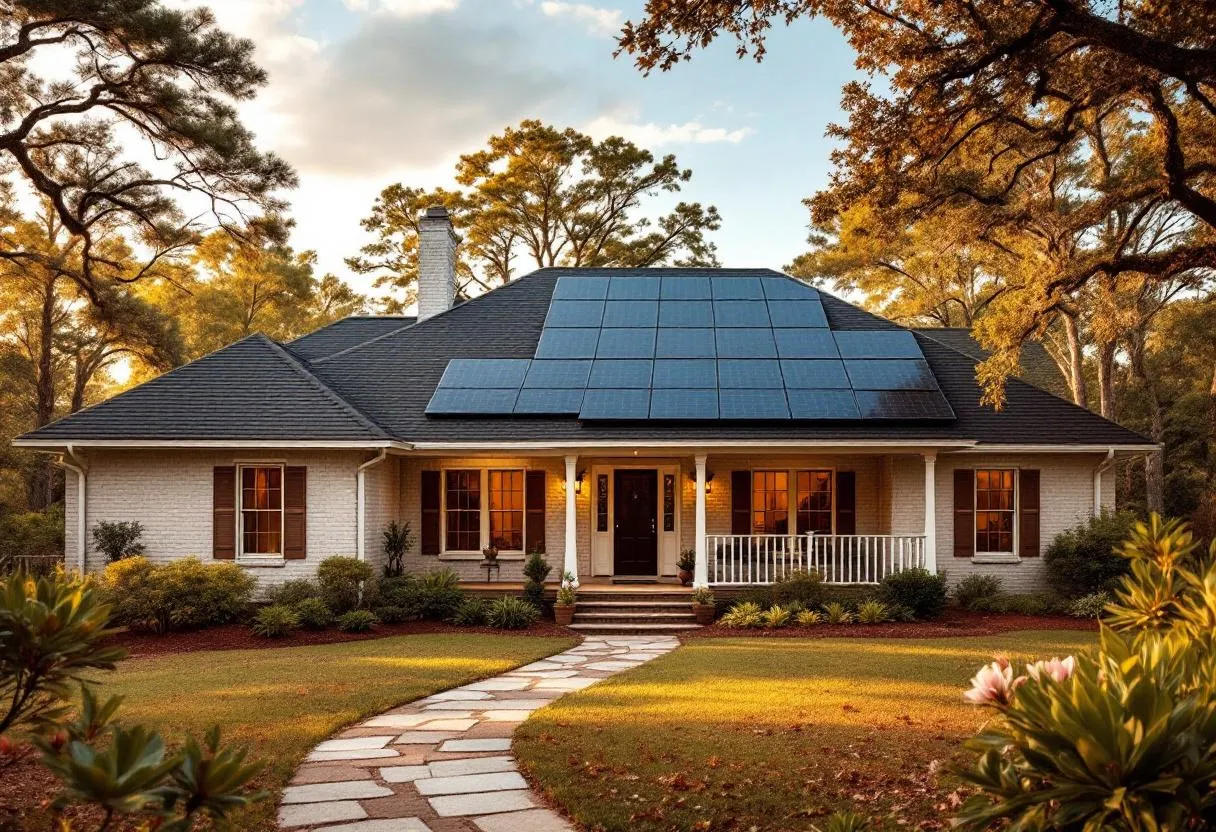
North Carolina is one of the best states for solar in the country. It may surprise you — NC is known for cloudy coastal weather and mountains. But the state has more solar power installed than almost any other state, ranking in the top 5 nationally.
Why? Because North Carolina has strong solar policies, solid sun hours (about 4.5 peak hours per day), and a unique mix of incentives that make going solar a smart financial move.
Whether you're in Charlotte, Raleigh, Asheville, or the Outer Banks — here's your full guide to every solar incentive available in NC for 2026.
🔑 Key Takeaways for North Carolina
Federal 30%
Claim 30%.
Property Tax Exemption
80% of solar's added value is exempt from property taxes.
Strong Net Metering
Duke Energy, Dominion, and co-ops all offer net metering.
7–12 Year Payback
Most NC homeowners break even within a decade.
30% (ITC)
This is the single biggest solar incentive available. If your solar system costs $25,000, you get $7,500 back from the IRS. It's a dollar-for-dollar reduction on your federal income taxes.
The 30% Credit
For illustration, let's break down a typical 8 kW system on a North Carolina home:
| Item | Amount |
|---|---|
| Average system cost | $25,000 |
Federal tax credit (30% exemption, and utility net metering. Combined, these still make NC one of the best solar states.
How does the NC property tax exemption for solar work?North Carolina exempts 80% of the added value from solar panel installations from your property tax calculation. So if solar adds $20,000 to your home's assessed value, only 20% of that ($4,000) counts toward your property taxes. This is a permanent benefit as long as the system is installed. Does Duke Energy North Carolina offer solar rebates?Duke Energy NC offers net metering — meaning you get credits for excess solar power you send to the grid. They also occasionally run solar incentive programs and have battery storage programs. Some past programs have offered direct rebates per watt of solar installed, so it is worth checking their website regularly for new offers. Frequently Asked QuestionsIs solar worth it in North Carolina with cloudy weather?Yes. NC gets about 4.5 peak sun hours per day on average. That is competitive with many sunny states. Solar panels also produce power from diffuse sunlight, so overcast days still generate electricity. Combine that with NC's incentives and low electricity rates in some areas, and solar is a solid investment here. How long will it take for solar panels to pay for themselves in NC?Most North Carolina homeowners see a payback period of 7 to 12 years. Factors that affect this include your system size, your monthly electricity bill, your exact location in NC, and whether you add battery storage. After the payback period, your panels produce essentially free electricity for another 15–20 years. Frequently Asked QuestionsDoes North Carolina have a state tax credit for solar?North Carolina does not currently offer a state-level solar tax credit. However, NC homeowners can still claim the federal State & Utility Credits plus the NC property tax exemption for solar installations. How does the NC property tax exemption for solar work?North Carolina exempts 80% of the added value from solar panel installations from your property tax calculation. This means even though solar may increase your home's value, 80% of that increase won't be taxed. Does Duke Energy North Carolina offer solar rebates?Duke Energy NC offers net metering programs that credit you for excess solar power sent to the grid. They also occasionally run solar incentive programs and rebates. Check their website for the latest offers in your area. What is net metering and how does it work in NC?Net metering lets you sell excess solar power back to the grid for credit on your electricity bill. In NC, major utilities like Duke Energy, Dominion Energy, and NC Electric Cooperatives all offer net metering programs, though specific rates vary by provider. Is solar a good investment in North Carolina?Yes. NC ranks in the top 5 states for solar adoption. With 4.5 peak sun hours per day, the federal incentives, and a property tax exemption, most NC homeowners see a payback period of 7–12 years and strong long-term savings. Find Your North Carolina Solar SavingsEnter your zip code to see your exact utility rebates and all incentives available for your NC home. Enter Your Zip Code → |