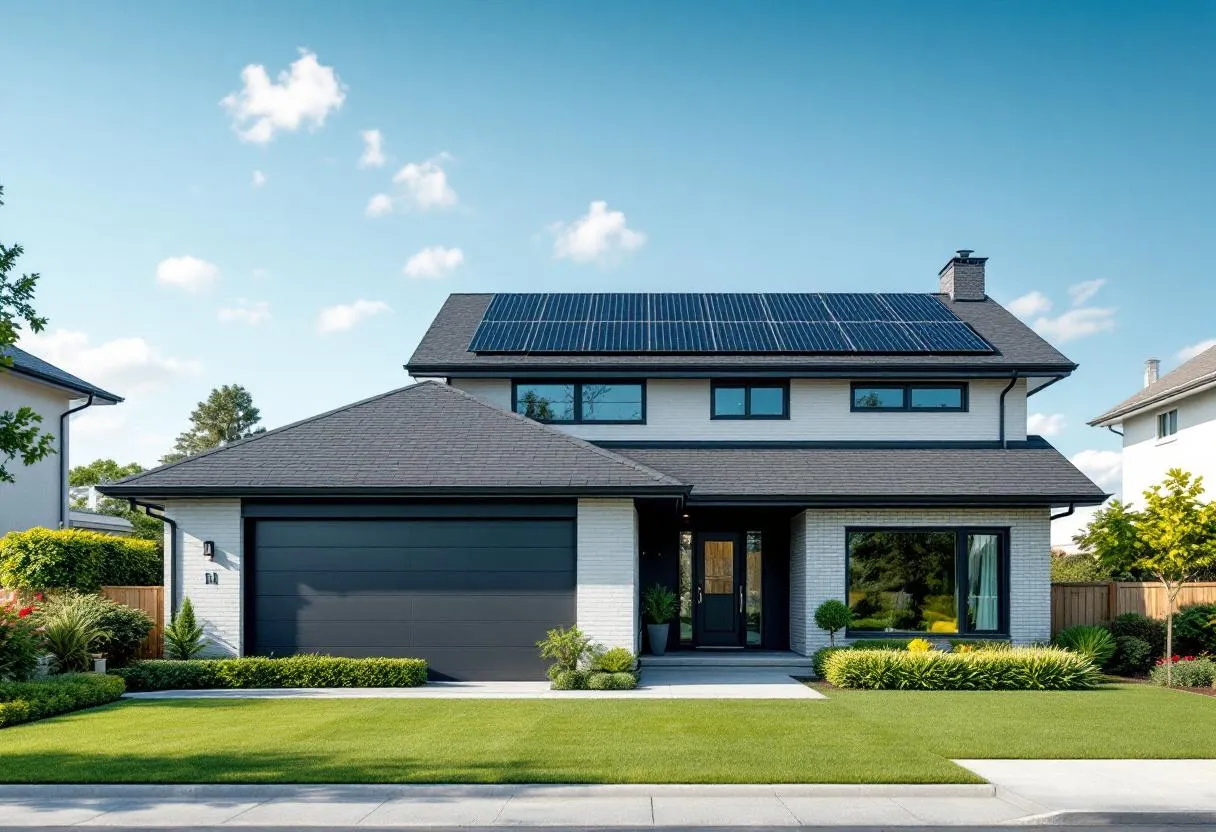
1. Is Solar Worth It in Pennsylvania?
Here is what most people don't know about Pennsylvania: it has the infrastructure, the policy framework, and the electricity prices that make solar a genuinely strong investment.
Pennsylvania has long been an energy powerhouse — coal, natural gas, nuclear. But as electricity prices have risen to about 16 to 18 cents per kWh in 2026 (up from around 12¢ only a few years ago), the math for solar has shifted dramatically in favor of homeowners.
The state gets roughly 4.0 to 4.5 peak sun hours per day on average. That's enough to make solar productive year-round. Southeastern PA (Philadelphia area and suburbs) gets a bit more, while the northwestern corner sees slightly less. But statewide, the numbers work.
- Federal ITC: State Discounts your total system cost — no cap
- SREC income: Earn tradable credits for every 1,000 kWh produced through the PA Sunshine Program
- Net metering: Full 1:1 retail rate credit for excess energy sent to the grid
- Property tax exemption: Solar panel value doesn't raise your property taxes
- AEPS: The state's Alternative Energy Portfolio Standard creates ongoing demand for solar credits
- Typical payback: 7 to 10 years after incentives
Let's go through every incentive, program, and policy point by point.
2. Solar Incentives (State Rebates)
The largest incentive available to Pennsylvania homeowners is the federal Investment Tax Credit (ITC). Under current law, you get a 30% for the cost of installing a solar system.
This is not a deduction — it is a credit. Every dollar of the credit directly reduces the taxes you owe, dollar for dollar.
Quick example: Your solar system costs $25,000. The 30% tax credit equals $7,500. That drops your net cost to $17,500 before any Pennsylvania-specific incentives.
- Rate: 30% liability to claim the credit. If you don't owe federal taxes in the installation year, you can carry the unused credit forward — but you can't receive a refund for the credit amount. Talk to a tax professional about your specific situation.
3. PA Sunshine Program — SREC I & SREC II
This is the Pennsylvania-specific incentive that can add real dollars to your pocket — and it's one of the most compelling reasons to go solar here.
Pennsylvania's SREC (Solar Renewable Energy Credit) program, often referred to as part of the broader "Pennsylvania Sunshine Program" framework, allows homeowners to earn tradable credits based on how much solar electricity their system produces.
How SRECs Work in Pennsylvania
Every 1,000 kilowatt-hours (kWh) — or 1 megawatt-hour (MWh) — of solar electricity your system generates equals one SREC. You can then sell that SREC on Pennsylvania's open SREC market.
Pennsylvania's SREC market is divided into two tiers:
- SREC I: The original, established market for earlier generations of solar installations. SREC I prices tend to be higher due to limited supply and older program design.
- SREC II: The successor market for newer installations. SREC II has its own pricing and auction structure. Most new residential systems register under SREC II.
Who buys your SRECs? Pennsylvania's Alternative Energy Portfolio Standard requires electric utilities — including PECO, PPL, Duquesne Light, and others — to source a certain percentage of their electricity from solar. They meet this requirement by purchasing SRECs from homeowners like you. This creates a real, ongoing market for your SRECs.
SREC Income Example: A typical 8 kW residential system in Pennsylvania produces approximately 9,000 to 10,000 kWh per year. That's 9 to 10 SRECs annually. At typical PA SREC prices (which have ranged from roughly $30 to $50 per SREC), that's about $270 to $500+ per year in SREC income — on top of your electric bill savings from net metering.
Most Pennsylvania homeowners sell their SRECs through an aggregator — a company that handles the registration, bidding, and paperwork on your behalf in exchange for a small percentage. This is the easiest approach. SREC agreements often run for 5 to 15 years, creating a long-term income stream.
SREC Revenue Example for a PA Homeowner
| Year | SRECs Produced | Price per SREC | Annual Income |
|---|---|---|---|
| Year 1 | 10 | $45 | $450 |
| Year 2 | 10 | $43 | $430 |
| Year 3 | 10 | $42 | $420 |
| Years 4–15 | 10/yr | ~$40 | ~$400/yr |
| Estimated 15-Year Total | $5,000+ | ||
* SREC prices in Pennsylvania fluctuate based on supply and demand. These are illustrative figures. PA's SREC market has seen prices typically ranging from $30 to $50+ per SREC in recent years, though prices can vary. Always get current SREC pricing from an aggregator when planning your installation.
- Earn 1 SREC per 1,000 kWh of solar production
- Two tiers: SREC I (legacy) and SREC II (newer installations)
- Sell through an aggregator or on the open market
- System must be registered and certified with the state
- Income is separate from electric bill savings — essentially a second stream of solar benefits
4. Net Metering in Pennsylvania (AEPS)
Net metering is the mechanism that lets you get paid (via bill credits) for the excess electricity your solar panels send to the grid. And Pennsylvania has full retail rate net metering — the best type of net metering you can get.
Here is how it works:
- On sunny days, your panels often produce more power than your home uses.
- The excess flows to the grid, and your utility meter runs backward.
- Your utility credits your account at the full retail rate — the same price per kWh that you pay when buying power from the grid.
- At night, those credits offset the electricity you pull from the grid.
- Any unused credits carry over to the next month.
The annual true-up: At the end of your utility's billing year (typically May 31 in Pennsylvania), any remaining net metering credits are settled. The utility buys your leftover credits at a rate that may be below retail — so it's best to right-size your system so you use most of your credits within the year rather than banking big surpluses.
- Credited at full retail rate (1:1, not wholesale)
- Available to all PA customers of investor-owned utilities (PECO, PPL, Duquesne, Met-Ed/Penelec, UGI, etc.)
- Credits roll over month to month
- Eligible systems up to 50 kW for residential under PA's net metering rules
- Cooperative and municipal utilities may have their own net metering policies
5. Pennsylvania's Alternative Energy Portfolio Standard (AEPS)
The Alternate Energy Portfolio Standard (also called AEPS) is the foundational policy that makes Pennsylvania's solar SREC market work. If you want to understand why utilities buy SRECs from homeowners, AEPS is why.
Passed in 2004, PA's AEPS requires that electricity suppliers in the state derive a portion of their power from "Tier I" and "Tier II" alternative energy sources. Solar energy falls under Tier I. The specific requirement has been that utilities source at least 0.5% of their electricity from solar photovoltaic (PV) systems by 2021, with continuing requirements thereafter.
To meet this solar requirement without building their own solar farms, many utilities purchase SRECs from residential and commercial solar system owners. This is what drives demand — and prices — in the PA SREC market.
Why this matters to you: The AEPS creates the legal obligation for utilities to buy solar credits. Without it, there would be no guaranteed market for your SRECs. As Pennsylvania reviews and potentially strengthens its AEPS requirements, demand for SRECs could increase — which could boost the value of your solar credits.
AEPS Tier Structure at a Glance
| Tier | Sources | Relevance to Solar |
|---|---|---|
| Tier I | Solar PV, wind, low-impact hydro, biopower, geothermal, fuel cells | Solar PV is the key driver — SRECs fulfill the Tier I solar carve-out |
| Tier II | Waste coal, distributed energy systems, demand response, large-plant hydropower, municipal solid waste | Not applicable to residential solar SRECs |
6. Property Tax Exemption for Solar
When you install solar panels on your home, it adds value. Studies consistently show solar increases home values by about 3% to 6%. In most states, a higher-value home means higher property taxes.
Not in Pennsylvania.
Pennsylvania provides a 100% property tax exemption for the added home value from solar installations. So if solar adds $15,000 to your home's assessed value, your property taxes stay exactly the same.
How it works: Under Pennsylvania law (30 Pa.C.S. § 6931.1), residential solar energy systems — including rooftop panels, ground mounts, and associated equipment — are exempt from local real property tax assessments. The exemption is automatic, though you may need to apply with your county assessment office depending on your municipality. It lasts as long as the solar system remains on your property.
- Exemption rate: 100% of solar-added value
- Applies to rooftop and ground-mounted systems
- Lasts for the life of the solar installation
- May require notification of your county assessor
7. PA Utility Programs
Beyond state-wide programs, your specific electric utility in Pennsylvania may offer additional incentives, programs, and services that make going solar even more attractive. Here's a breakdown of the major PA utilities:
⚡ PECO (Philadelphia Area)
PECO serves the greater Philadelphia metropolitan area, including the city itself and surrounding suburban counties. PECO offers one of the better solar solar programs in Pennsylvania. Their C&I Solar programs and residential offerings include net metering at full retail rates, streamlined interconnection processes, and access to the SREC market. PECO's territory has among the highest electricity rates in the state, making solar savings particularly meaningful here.
⚡ PPL Electric Utilities (Lehigh Valley, Scranton)
PPL serves the Lehigh Valley, Lancaster, and northeastern Pennsylvania (including Scranton/Wilkes-Barre). They participate fully in PA's net metering and SREC programs. PPL has been supportive of distributed solar generation and offers a relatively straightforward interconnection process for residential solar installations.
⚡ Duquesne Light Company (Pittsburgh Area)
Serving the Pittsburgh metropolitan area and western Pennsylvania, Duquesne Light is an important player in PA's solar landscape. Customers benefit from full retail net metering, SREC market access, and Duquesne Light's own energy efficiency programs that can complement a solar installation.
⚡ Met-Ed & Penelec (FirstEnergy Territory)
Met-Ed (Metropolitan Edison) and Penelec (Pennsylvania Electric) — both part of FirstEnergy — serve central and western Pennsylvania. They offer net metering at full retail rate and participate in the SREC market. FirstEnergy has specific interconnection standards and application procedures for distributed generation that are well-documented on their website.
⚡ UGI Utilities
UGI serves parts of southeastern, central, and northeastern Pennsylvania. UGI offers net metering, participates in the SREC market, and has its own energy efficiency rebate programs for appliances and HVAC that can reduce the size of solar system you need — further lowering your upfront cost.
⚠️ Note: In Pennsylvania's deregulated electricity market, your utility handles delivery and net metering, but your electricity supplier (the company whose name is on your bill) may vary depending on the competitive electricity generation supplier (EGS) you've chosen. Make sure your chosen supplier supports net metering and that your utility has approved your system interconnection before going live.
8. Solar Cost & Payback Breakdown
So what does solar actually cost in Pennsylvania — and when does it pay for itself?
The average cost of solar installations in Pennsylvania in 2026 is around $3.00 to $3.50 per watt. For an 8 kW residential system, that puts the total gross cost at roughly $24,000 to $28,000.
Pennsylvania Solar Payback Example (8 kW System)
| Gross system cost (before incentives) | $25,000 |
| Federal tax credit (State Rebates) | –$7,500 |
| SREC income (15-year estimate) | –$5,000 |
| Effective net cost after incentives | $12,500 |
| Estimated annual electric bill savings | ~$1,200–$1,600/yr |
| Estimated payback period | 7–10 years |
* All figures are illustrative estimates. Actual costs vary by system size, roof type, installer, shading, utility rates, and market SREC prices. SREC income projections assume a stable market — prices may fluctuate. Always get multiple quotes and calculate based on your specific situation.
The bottom line: Pennsylvania's combination of the 30% tax credit, SREC income, full retail net metering, and the property tax exemption makes solar payback very achievable. After the initial 7 to 10 year payback period, you're generating essentially free electricity for the remaining 15 to 20+ years of your system's life. And unlike fossil-based electricity that only gets more expensive, your solar panels lock in your power cost at a fixed rate from day one.
Factors That Affect Your PA Solar Payback
- Your location in PA: Southeastern PA (Philadelphia-area) gets slightly more sun than northwestern PA, which means more SRECs and faster payback
- Current electricity rate: The higher your utility rate, the faster solar pays for itself. PECO territory customers often see the quickest returns
- Roof orientation & tilt: South-facing panels with a 20-40 degree tilt produce the most energy
- SREC prices: Higher SREC prices accelerate payback. Check current market rates before committing
- System sizing: Right-sizing your system (not oversizing) makes the most of net metering credits
Frequently Asked Questions
Does Pennsylvania offer a solar tax credit?
Residents in Pennsylvania qualify for the 30%, Pennsylvania offers additional incentives including net metering programs, solar renewable energy credits (SRECs), and local utility rebates.
Is solar power worth it in Pennsylvania?
Yes. Solar in Pennsylvania typically pays for itself within 6-9 years due to the combination of high electricity rates and available incentives.
Find Your Pennsylvania Solar Savings
Enter your zip code to see your exact utility rebates and all incentives available for your PA home.
Enter Your Zip Code →