💡 Want to power your entire outdoor space for free?
See how much you could save with a full solar panel system. Check your solar savings →
Picture this: you're standing in your yard at dusk, and it looks like a cave. Dark corners. Hidden steps. Zero atmosphere.
You want to fix it. But every store and website throws two totally different options at you — solar string lights and solar path lights. They look different, cost different amounts, and do completely different jobs. So which one actually belongs in your yard?
We're going to break down every angle: purpose, price, installation, battery life, durability, and the best use cases. By the end, you'll know exactly which setup to pick — or whether you should grab both.
🎯 Purpose: Ambiance vs Safety
Let's start with the biggest difference — what each type of light is actually for.
💫 Solar String Lights: Made for Atmosphere
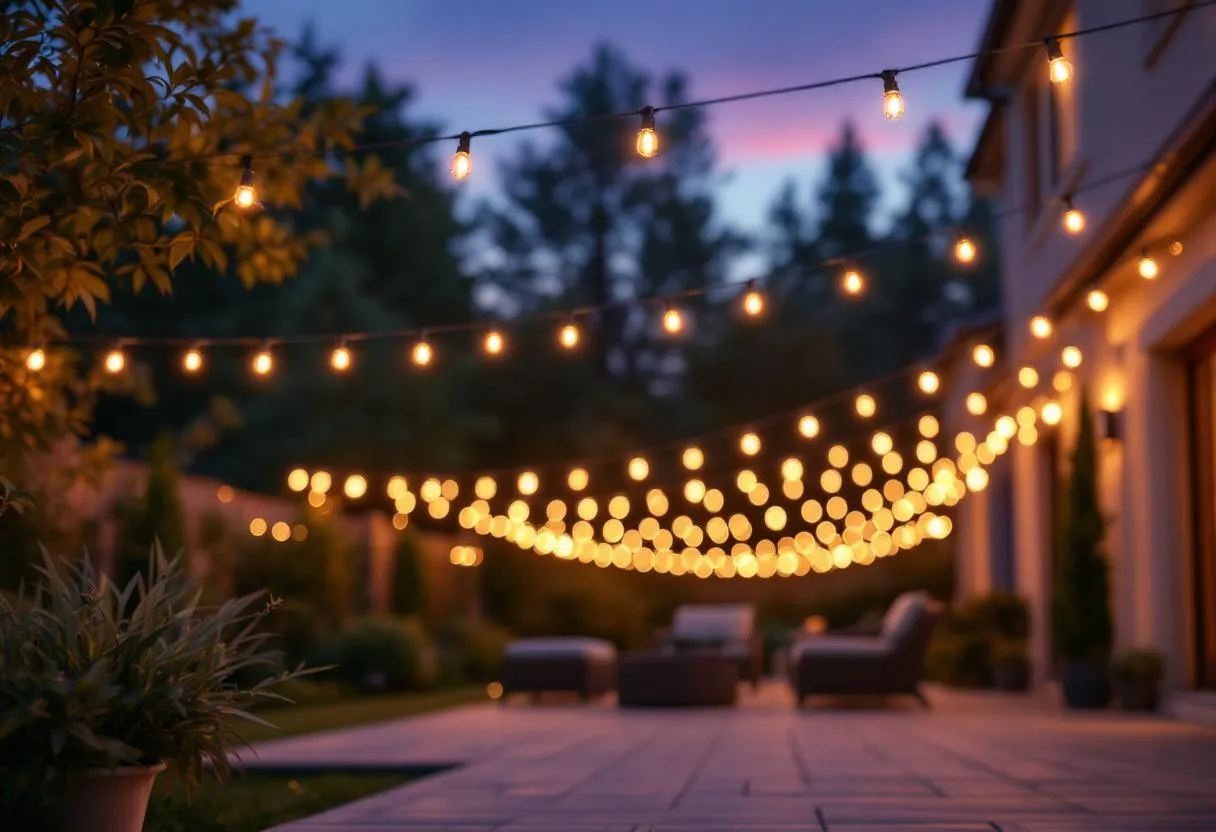
String lights are all about mood. Drape them across a patio, wrap them around a tree, or hang them along a fence line. They create a warm, cozy glow that makes your outdoor space feel inviting.
Best for: Patio dining, garden parties, fence decoration, tree wraps, pergola lighting, and any situation where you want that warm, magical vibe.
🛤️ Solar Path Lights: Made for Safety & Navigation
Path lights are the workhorses. They stake into the ground along walkways, driveways, and garden borders to light up the places people actually walk. You won't trip over your dog at midnight.
Best for: Walkways, driveways, garden borders, steps, stairways, front yard edges, and anywhere someone might stumble in the dark.
💰 Cost: Which Is Cheaper?
Both are way cheaper than wired lights — no electrician needed, no digging trenches. But how do they compare to each other?
| Feature | 💫 String Lights | 🛤️ Path Lights |
|---|---|---|
| Per-pack price range | $15 – $60 | $20 – $80 |
| Typical pack size | 1 set (25–50 ft) | 4–12 individual stakes |
| Cost per foot/space | ~$0.60/ft | ~$3–$7/light |
| Electricity cost | $0 (solar) | $0 (solar) |
The verdict: String lights win on raw cost per foot of coverage. But path lights are individual units, so you only buy what you need for your specific layout. For a small patio, a single string pack is hard to beat.
🔧 Installation Effort
Both types are tool-free — that's the whole point of solar. Here's how they compare in real life.
💫 String Lights Setup
- ☀️ Unpack the string (one solar panel)
- 📍 Place the solar panel in direct sun
- 🪝 Hang or drape the lights where you want them
- 📎 Use clips, hooks, or zip ties to secure
- ⏱️ Total time: 10–30 minutes
🛤️ Path Lights Setup
- 📐 Plan your spacing (6–8 ft apart)
- 🔌 Push each stake into the ground
- ☀️ Each light has its own built-in panel
- 🌙 Turn to "on" and walk away
- ⏱️ Total time: 15–45 minutes
The verdict: Both are dead simple. Path lights take slightly longer because you're placing individual stakes, but the difference is minimal. Neither needs a drill, wire, or extension cord.
🔋 Battery & Charging Differences
This is where things get interesting. Both use solar energy, but the way they collect and store it is quite different.
| Feature | 💫 String Lights | 🛤️ Path Lights |
|---|---|---|
| Solar panel setup | One central panel | Built into each light |
| Charging time | 6–8 hours | 6–8 hours each |
| Runtime | 8–12 hours | 6–10 hours |
| Battery size | 2200–3000mAh (single) | 600–1200mAh (per light) |
| If panel is shaded... | All lights affected | Only that one light |
| Battery replaceable? | Usually yes | Most models yes |
Key insight: String lights charge from one panel — so if that panel gets shade, the whole string goes dim. Path lights are independent, meaning one shaded path light won't affect the others. That's a real advantage for yards with tall trees or walls.
🌧️ Durability & Weather Resistance
Outdoor lights take a beating — rain, snow, blazing sun, kids, pets, and lawnmowers. Here's how each holds up.
💫 String Lights Durability
Most quality string lights are rated IP44 to IP65. That means they handle rain and splashes just fine. The weak point is usually the connection between the wire and the solar panel — that joint needs a good seal.
The individual bulbs are usually plastic or LED chips sealed inside, so they don't break from impact. But a long wire draped through trees or along fences can catch on branches during storms.
🛤️ Path Lights Durability
Good path lights are rated IP65 to IP67, meaning they can handle heavy rain and even brief submersion. They're built to stay in the ground — most have sturdy plastic or metal stakes that survive foot traffic and lawn mowing (if placed right).
Their compact shape means less surface area for wind to catch. The main risk is cheap plastic cracking in extreme cold or UV damage over years of sun exposure.
💡 Tip: Whatever you buy, look for an IP rating of 65 or higher. Anything below IP65 will struggle in heavy rain.
The verdict: Path lights have a slight edge in raw durability ratings. Their compact, planted design takes less abuse from wind and weather than a long wire strung across a yard.
🏡 Best Use Cases for Each
💫 Choose String Lights For:
- ✨ Patio and deck ambient lighting
- 🎉 Outdoor parties and gatherings
- 🌳 Wrapping around trees or pergolas
- 🏠 Fence-line decoration
- 🛋️ Creating a cozy reading nook outside
- 💑 Date-night atmosphere
🛤️ Choose Path Lights For:
- 🚶 Walkway and sidewalk safety
- 🚗 Driveway edge markers
- 🥾 Garden bed and border lighting
- 📍 Highlighting steps and stairs
- 🏃 Quick trips to the mailbox at night
- 🐕 Finding your way to the backyard
⚔️ Head-to-Head at a Glance
| Category | 💫 String Lights | 🛤️ Path Lights | Winner |
|---|---|---|---|
| Purpose | Ambiance | Safety | 🤝 Tie |
| Cost | $15–$60 | $20–$80 | 💫 String |
| Installation | 10–30 min | 15–45 min | 💫 Slightly |
| Battery life | 8–12 hrs | 6–10 hrs | 💫 String |
| Weather resistance | IP44–IP65 | IP65–IP67 | 🛤️ Path |
| Shade tolerance | Panel must be sunny | Each is independent | 🛤️ Path |
| Looks & atmosphere | ⭐⭐⭐⭐⭐ | ⭐⭐⭐ | 💫 String |
| Safety & visibility | ⭐⭐ | ⭐⭐⭐⭐⭐ | 🛤️ Path |
✅ Quick Decision Guide
Not sure which way to go? Match your situation below.
Pick 💫 String Lights If You…
- ✅ Want a warm, cozy outdoor vibe
- ✅ Host dinner parties or BBQs
- ✅ Have a patio, deck, or pergola to decorate
- ✅ Are on a tight budget
- ✅ Want maximum glow from a single panel
- ✅ Plan to move or rearrange lights seasonally
Pick 🛤️ Path Lights If You…
- ✅ Need to light up walkways safely
- ✅ Have young kids or pets running outside at night
- ✅ Want to prevent trips and falls on steps
- ✅ Have a shaded yard (independent panels help)
- ✅ Decorate garden beds and borders
- ✅ Want a "set it and forget it" solution
🤝 Can You Use Both? (Spoiler: Yes!)
Absolutely — and honestly, most of us recommend doing it. Here's why:
String lights handle the above-ground atmosphere while path lights handle the ground-level safety. Together, they create a complete outdoor lighting system that covers every angle.
Try this combo: Put solar path lights along your front walkway for safe navigation, then drape solar string lights across your back patio for evening entertaining. Your guests get a guided path to the door and a gorgeous space to hang out once they arrive.
🔥 Pro Combo Setup:
- 1️⃣ Path lights along main walkways and steps
- 2️⃣ String lights overhead on the patio or pergola
- 3️⃣ A few solar spotlights on trees or architectural features
- 4️⃣ Result: A fully lit, safe, and gorgeous yard — $0 electric bill
Since both run on free solar energy, the ongoing cost stays at zero no matter how many you add. The only limit is your style.
⭐ Top String Light Picks for 2026
Brightech Ambience Pro Solar String Lights
The gold standard for outdoor string lighting. Shatterproof LED bulbs give a warm, vintage bistro vibe that works on any patio. IP65 rated, they survive rain, wind, and snow. One solar panel powers the entire 27-foot string for up to 10 hours.
TaoTronics Solar Fairy String Lights (33 ft)
Long, flexible, and super affordable. These fairy-style lights wrap around almost anything — bushes, fences, railings. With 8 different light modes (twinkle, steady, wave), they're the most versatile budget option for creative decorating.
Goothy Solar Globe String Lights (50 ft / 50 Bulbs)
Fifty frosted globe bulbs create a stunning canopy effect. At 50 feet, this is the longest string on our list — perfect for large yards, long fences, or creating a full outdoor ceiling. Warm white LEDs that guests mistake for wired lights.
🛤️ Top Path Light Picks for 2026
GIGALUMI Solar Path Lights (12 Pack)
The best-selling path light for a reason. Clean, modern design with strong stainless steel stakes. IP67 waterproof — these survive heavy rain, snow, and even sprinkler systems. After a full day of sun, they cast a bright, wide glow for up to 10 hours.
LITOM Solar Landscape Spotlights (6 Pack)
These are the heavy hitters. With 2 brightness modes up to 600 lumens, they're bright enough to genuinely light up a driveway or wide walkway. The adjustable heads let you spotlight trees, signs, or house features — not just the ground.
Hampton Bay Solar Bronze Path Lights (8 Pack)
For homeowners who care about curb appeal, these bronze-styled path lights look like they cost 10x more. The decorative lens creates a beautiful starburst light pattern on the ground. Sturdy metal body withstands weather for years.